
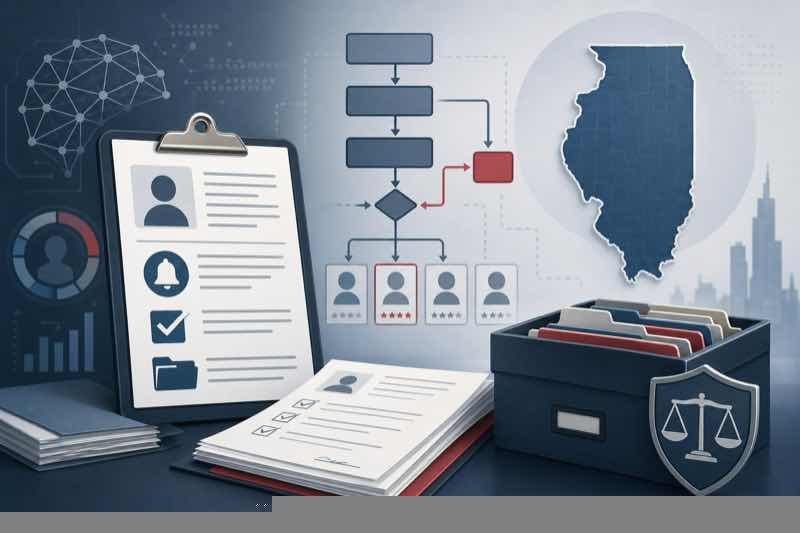
Illinois is becoming one of the clearest examples of where employment AI regulation is heading: notice, documentation, and practical scrutiny of how tools influence decisions.
If you want the official bill history, Illinois’s law is here: HB 3773. The Illinois Department of Human Rights also has a direct summary page here: Artificial Intelligence in Employment.
Recent draft rules from the Illinois Department of Human Rights would implement the state's newer restrictions on AI discrimination in employment. The bigger point is the compliance model taking shape around them.
The trigger looks broad
The reported standard is not limited to futuristic hiring bots. The rules would apply when AI is used “to influence or facilitate” covered employment decisions, including recruiting, hiring, promotion, discipline, discharge, training selection, and terms or conditions of employment.
That deserves attention because the notice trigger may be broader than many employers expect. If AI is involved in screening resumes, targeting job ads, evaluating candidates, analyzing interviews, or helping shape employment outcomes, notice may be required even if the employer did not intend discrimination.
Employment AI is becoming an operations issue
The trend line is clear: employment AI law is moving away from “prove the tool caused unlawful bias first” and toward “tell people when the tool is in the process, document what it is doing, and be ready to defend the workflow.”
That is why legal teams need a real inventory of where AI shows up in the employment stack, not just in one recruiting product. AI can appear in sourcing, ranking, interview analytics, assessments, chatbots, promotion systems, and workforce-monitoring features.
The takeaway
The answer is not to ban every automated feature. It is to map the tools, define which ones influence covered decisions, and decide where notice, contract review, testing, and documentation are required.
Illinois is sending a simple message: if AI helps shape employment outcomes, silence is not a compliance strategy.
Leave a Reply