
Tag: Employment & Workplace AI

  • Illinois Is Turning AI in Employment Into a Notice and Recordkeeping Problem

    Illinois Is Turning AI in Employment Into a Notice and Recordkeeping Problem

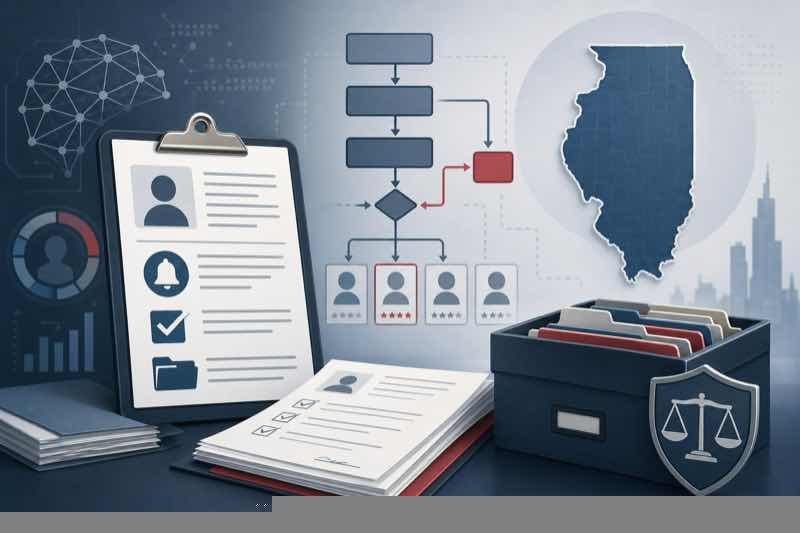
    Illinois is becoming one of the clearest examples of where employment AI regulation is heading: notice, documentation, and practical scrutiny of how tools influence decisions.

    If you want the official bill history, Illinois’s law is here: HB 3773. The Illinois Department of Human Rights also has a direct summary page here: Artificial Intelligence in Employment.

    Recent draft rules from the Illinois Department of Human Rights would implement the state's newer restrictions on AI discrimination in employment. The bigger point is the compliance model taking shape around them.

    The trigger looks broad

    The reported standard is not limited to futuristic hiring bots. The rules would apply when AI is used “to influence or facilitate” covered employment decisions, including recruiting, hiring, promotion, discipline, discharge, training selection, and terms or conditions of employment.

    That deserves attention because the notice trigger may be broader than many employers expect. If AI is involved in screening resumes, targeting job ads, evaluating candidates, analyzing interviews, or helping shape employment outcomes, notice may be required even if the employer did not intend discrimination.

    Employment AI is becoming an operations issue

    The trend line is clear: employment AI law is moving away from “prove the tool caused unlawful bias first” and toward “tell people when the tool is in the process, document what it is doing, and be ready to defend the workflow.”

    That is why legal teams need a real inventory of where AI shows up in the employment stack, not just in one recruiting product. AI can appear in sourcing, ranking, interview analytics, assessments, chatbots, promotion systems, and workforce-monitoring features.

    The takeaway

    The answer is not to ban every automated feature. It is to map the tools, define which ones influence covered decisions, and decide where notice, contract review, testing, and documentation are required.

    Illinois is sending a simple message: if AI helps shape employment outcomes, silence is not a compliance strategy.

  • Connecticut’s SB 5 Shows How Far a State Can Push on AI Governance

    Connecticut’s SB 5 Shows How Far a State Can Push on AI Governance

    Connecticut has moved from “state to watch” to a state companies may actually need to operationalize against.

    If you want the official bill text, Connecticut’s latest substitute text is here: SB 5.

    On May 1, 2026, the legislature passed SB 5, a broad AI bill that would place Connecticut among the more aggressive state players in AI governance. The point is not just that another state acted. It is that Connecticut appears to be building a framework that spans multiple AI risk areas at once.

    What makes this state move worth watching

    A lot of state AI proposals focus on one slice of the problem, usually hiring tools, consumer protection, or deepfakes. Connecticut's approach is broader. It treats AI governance as a cross-functional legal problem rather than a niche product issue.

    That matters because it better reflects how organizations actually use AI. AI now touches hiring, customer communications, vendor tools, automated decisions, synthetic media, and internal workflows.

    The patchwork problem is getting harder

    SB 5 is also another reminder that federal law is not about to simplify the map. States are continuing to legislate, and they are doing it with different definitions, priorities, and enforcement models.

    That creates two practical tasks for legal teams. First, they need a real inventory of where AI shows up in the business. Second, they need a governance structure that can absorb state variation without rewriting the whole policy stack every time a legislature moves.

    The takeaway

    Connecticut’s bill may not become the national template by itself. But it does point toward the future: AI governance that looks more like privacy or employment compliance, meaning state-specific, operationally demanding, and hard to solve with one policy memo.

    Connecticut is not the whole story. But it is increasingly part of the real one.

  • Colorado Rewrites Its AI Law Before It Fully Takes Hold

    Colorado Rewrites Its AI Law Before It Fully Takes Hold

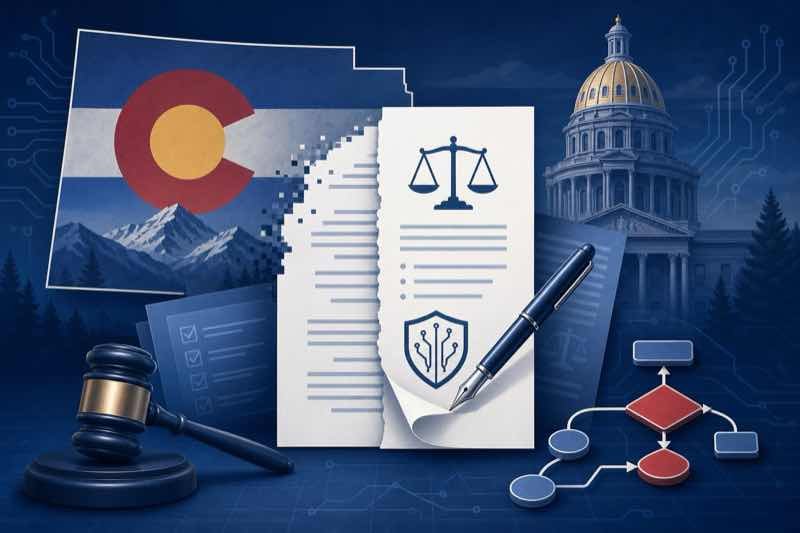
    Colorado's AI law is moving again before many companies have even finished mapping the original version.

    If you want the official text, the Colorado bill is here: SB26-189.

    In May 2026, lawmakers passed SB 26-189, a major rewrite of the state's earlier AI framework. The main shift is from regulating broadly defined “high-risk AI systems” to regulating automated decision-making technology, or ADMT, when it materially influences consequential decisions.

    What stands out is how directly the law targets decision environments legal teams already care about: employment, housing, lending, insurance, health care, education, and essential government services. The practical question is less about what a tool is called and more about how it is used when it affects a person in a meaningful way.

    The new focus is operational accountability

    The revised bill is set to take effect on January 1, 2027. That buys time, but it also makes the compliance direction clearer.

    Developers would need to give deployers technical documentation on intended uses, training data categories, limitations, and human-review instructions. Deployers would need to provide consumer notices and, after an adverse outcome, a plain-language explanation of the role the system played. Consumers would also have rights to seek correction of inaccurate data and meaningful human review.

    What legal teams should focus on

    This is especially important for employment and other high-impact workflows. Recruiting tools, ranking systems, interview-analysis products, and recommendation engines can all end up inside the regulatory frame if they materially influence decisions.

    That means the compliance question becomes more concrete: what is the system doing, who is relying on it, what notice is required, and what happens when someone challenges the outcome?

    The bigger lesson

    Colorado’s rewrite is a useful reminder that state AI compliance is still moving in real time. Static AI policies are going to age badly. Legal and compliance teams need a more flexible operating model that can absorb changing definitions, disclosure duties, and review rights across states.

    The takeaway is not that Colorado is backing away from AI regulation. It is that Colorado is trying to make its law more targeted and more workable. For companies using AI in consequential decisions, the safer question is not “do we use AI?” but “can we explain and defend how this system influenced the decision?”