The Harvey-DeepJudge partnership offers a clear picture of where legal AI is heading next: toward institutional knowledge.
Harvey brings the workflow layer. DeepJudge brings prior work, negotiated positions, internal expertise, and permissions-aware access to what a firm or legal department already knows. Put together, the pitch is simple: AI should do more than produce a plausible answer. It should reflect how the organization actually practices.
What is actually at stake
A lot of legal AI value will be won or lost here.
If a system cannot reflect prior positions, accepted language, internal judgment, and ethical-wall-aware access rules, the output may be fast but still generic. Useful, maybe. Institutional, no.
The deeper buyer question is shifting from model quality alone to whether the model can operate inside the knowledge, permissions, and standards that make a legal team distinctive.
What the partnership signals
Harvey and DeepJudge are betting that the next wave of legal AI will be less about raw model performance and more about context control.
That means legal teams should pay closer attention to:
how AI reaches internal knowledge
whether permissions and ethical walls stay intact
how prior work informs drafting and analysis
whether outputs reflect firm-specific or department-specific standards
The bigger shift
This fits the same broader pattern visible across iManage, Harvey, Anthropic, and other legal AI players. The market is moving away from model quality alone and toward workflow ownership, governed context, and knowledge grounding.
That may sound less flashy than another reasoning benchmark. It is also much closer to where real legal advantage lives.
OpenAI's partnership with Eudia offers a useful clue about where legal AI is heading next.
This is a workflow story more than a chatbot story. Eudia says the partnership is aimed at government legal and acquisition teams, combining OpenAI's models with Eudia's operating layer for regulated work.
What matters here is not simply which model sounds smartest. It is who gets inside the workflow and becomes hard to replace.
Government is where this gets real
Government legal and acquisition work is where AI stops feeling like a novelty and starts looking like infrastructure.
Once AI touches contracting, legal review, and mission-critical decisions, buyers need to ask harder questions about:
control
auditability
permissions
human review
vendor concentration risk
Those are not side issues. They are the real product.
What buyers should take from it
The public announcement is still high level, and it does not answer every diligence question. But it is a useful signal.
Frontier-model companies are not staying behind the curtain. They are moving into legal and acquisition workflows through specialized partners that already understand the operating environment.
For legal and procurement teams, that means the smarter evaluation lens is no longer just model quality. It is whether the workflow around the model is governable, reviewable, and defensible.
The bigger shift
This is one more sign that legal AI is moving beyond the demo layer.
The winners may not be the companies with the flashiest model. They may be the ones that control the workflow around it.
Disney v. Midjourney makes the AI copyright fight more concrete.
The case is about training data, but it is also about outputs that allegedly look too much like famous protected characters and franchise imagery.
What the case is actually about
Disney, Universal, and affiliated rights holders sued Midjourney in federal court in Los Angeles on June 11, 2025.
The case is:
Case:Disney Enterprises Inc. v. Midjourney Inc.
Court: C.D. Cal.
Docket: 2:25-cv-05275
Status: pending
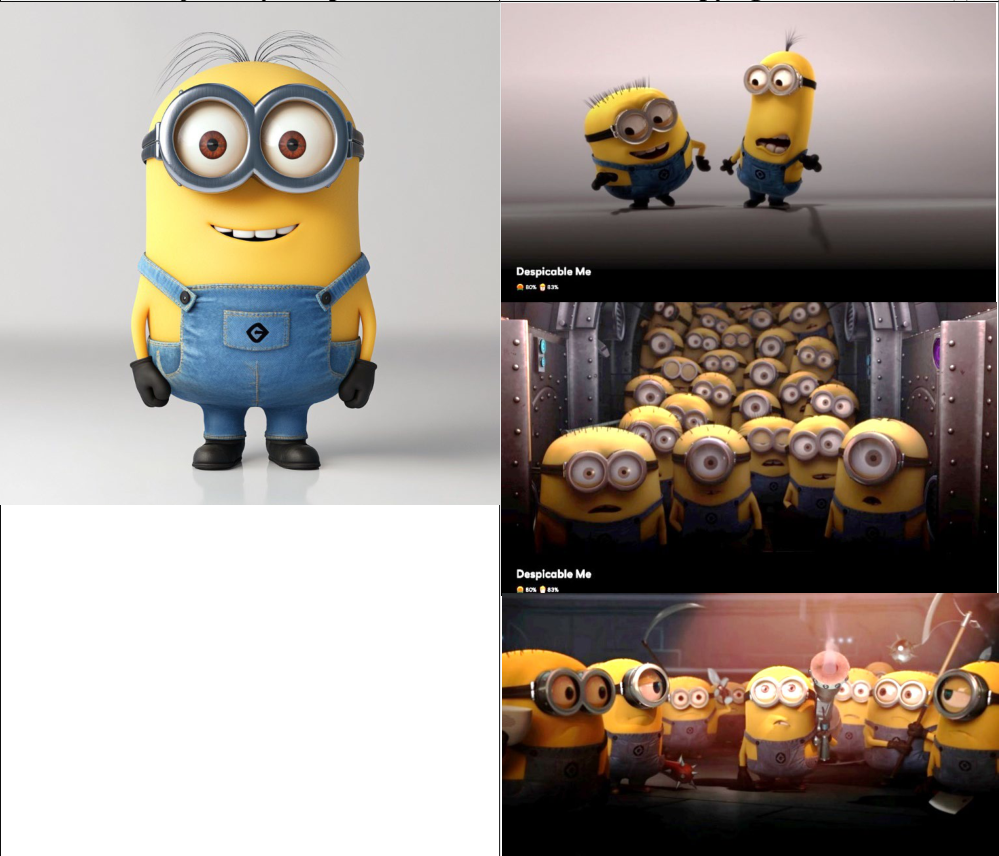
The studios' position is straightforward. They say Midjourney was built using copyrighted works and that the service can generate outputs that are too close to protected characters and expressive elements. The complaint reportedly includes example prompts and output images involving well-known properties, which is part of why the case landed so clearly in public discussion.
Two examples from the complaint show why the output issue is getting so much attention:
Cropped complaint comparison image showing an alleged Midjourney Homer Simpson output beside Disney reference images. Source: Complaint, Disney Enterprises Inc. v. Midjourney Inc., No. 2:25-cv-05275 (C.D. Cal.), page 32.Cropped complaint comparison image showing an alleged Midjourney Minions output beside Universal reference images. Source: Complaint, Disney Enterprises Inc. v. Midjourney Inc., No. 2:25-cv-05275 (C.D. Cal.), page 51.
Midjourney’s likely response is also familiar. Training is not the same as republishing a work. Not every prompted image is substantially similar enough to infringe. And not every reference to a known character, franchise, or visual style cleanly collapses into liability for the platform.
That is why this case matters. Both sides are arguing about where the legal line sits when a model produces commercially useful images that unmistakably evoke existing protected expression.
Can businesses use Midjourney images commercially?
Midjourney’s published guidance says customers generally own the images and videos they create and may use them commercially, subject to its terms and plan requirements. For businesses with more than $1 million in annual gross revenue, Midjourney says a Pro or Mega Plan is required for commercial use.
That contractual permission is only one part of the analysis. It does not guarantee that a particular output is noninfringing, that the user owns every element in the output, or that the output qualifies for copyright protection. Midjourney’s terms provide the service and assets on an “as is” basis, disclaim a warranty of noninfringement, and place responsibility for using or redistributing assets on the customer.
For business use, the practical controls should include:
confirming that the account and subscription plan permit the intended commercial use;
screening prompts and outputs for recognizable characters, logos, protected expression, and other third-party rights;
retaining records of prompts, source materials, edits, and human review;
requiring additional clearance before using AI-generated images in prominent campaigns, products, or customer deliverables; and
reviewing vendor terms regularly because platform rules and protections can change.
Commercial-use permission from the platform answers whether Midjourney permits the use. It does not answer whether a rights holder may challenge it.
For companies, the issue is not just whether Midjourney wins or loses.
It is whether the business has decided what level of copyright and brand-adjacent risk it is actually willing to accept when employees use generative AI in public-facing work.
Many legal teams are comfortable saying obvious character replication is out of bounds. The harder question is the gray zone. Is the company willing to rely on a fair use argument if a marketing image is styled to evoke Disney, South Park, or another highly recognizable visual world? Is it comfortable arguing that a prompt drew on a style, not a protected work? Is it willing to defend that position after publication, in a customer campaign, or in court?
That is the governance issue this case sharpens. Companies need a view on where they are comfortable being aggressive, where they want to be conservative, and which arguments they are actually prepared to stand behind if challenged.
They also need to account for contract risk, not just copyright doctrine. Most, if not all, major AI image providers put the user on the hook for at least some infringement risk tied to prompts, inputs, or outputs. Even when a vendor offers limited indemnity, it is often narrow and conditional. So a company deciding to operate in the gray zone may also be deciding that it, not the service provider, will carry much of the downstream claim risk.
The Clearon AI takeaway
Disney v. Midjourney turns AI copyright risk into a risk-allocation question for users, not just model developers.
The practical lesson is less “never touch this” and more “decide, in advance, which copyright arguments your company is truly willing to own.”
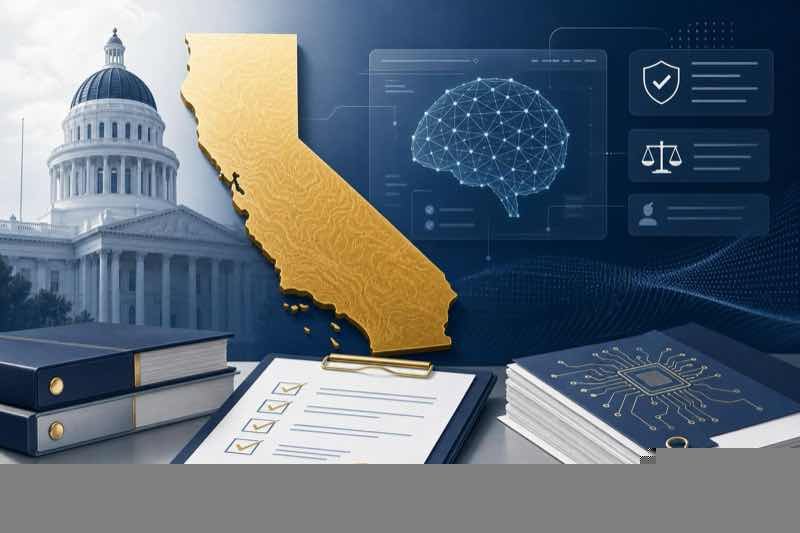
California's latest AI move did not come through a broad consumer AI statute. It came through procurement.
If you want the official source, California’s executive order is here: Executive Order N-5-26.
In March 2026, Governor Gavin Newsom issued Executive Order N-5-26, directing the state to build a new procurement framework for AI. That may sound narrower than a headline AI law, but it could matter just as much for companies that sell AI tools or services into large buyers.
Procurement is where AI governance gets real
The order points toward a system in which AI vendors may need to make structured representations about how their systems are built, governed, and monitored. That includes familiar pressure points like data handling, bias controls, civil-liberties protections, and related safeguards.
Procurement is where abstract AI principles often become contract obligations. It is easy to talk about responsible AI in marketing language. It is much harder to answer a buyer's concrete questions about training data, oversight, controls, auditability, and remediation.
What legal teams should take from it
Procurement is one of the fastest ways to force operational discipline. Buyers can demand certifications, representations, warranties, and disclosure commitments long before legislatures settle every policy fight.
That means legal departments are no longer just debating AI governance in theory. They are negotiating it in contracts.
The takeaway
For vendors, the lesson is simple: if governance documentation does not exist in a usable form, build it now. For buyers, California offers a practical model for imposing more discipline on higher-risk AI tools without waiting for a perfect statute.
California is not just regulating AI through lawmaking. It is shaping the market through purchasing power. That is often how governance becomes real.