Generative AI can accelerate legal work, but it does not change who is responsible for a court filing. Use this checklist before filing any paper that may contain AI-assisted research, drafting, revision, or analysis.
It is a practical starting point, not a substitute for the requirements applicable to a particular matter.
Quick Rule
Do not file an AI-assisted document until a qualified human has independently verified every legal authority, quotation, factual assertion, record citation, and representation about the proceeding against an authoritative source.
If any item cannot be checked, stop and resolve it before filing.
1. Confirm Permitted Use
[ ] Identify the AI tools used and the portions of the filing they may have affected.
[ ] Confirm the use complies with client instructions, protective orders, confidentiality duties, firm policy, and applicable law.
[ ] Check local rules, standing orders, judge-specific practices, and filing instructions for AI restrictions or disclosure requirements.
[ ] Confirm no protected information was entered into an unapproved system.
2. Verify Authorities and Quotations
[ ] Open and read every cited authority in an authoritative source.
[ ] Confirm each citation identifies the correct authority and current version.
[ ] Confirm that each authority supports the precise proposition for which it is cited.
[ ] Complete any required AI-use disclosures or certifications.
[ ] Obtain informed approval from the signing lawyer and responsible supervising, local, or sponsoring counsel.
Ready to File
[ ] Every authority, quotation, fact, and record citation has been independently verified.
[ ] The final version has not changed since verification.
[ ] Applicable AI rules, client restrictions, and disclosure duties have been satisfied.
[ ] The signing lawyer can accurately explain how the filing was prepared and checked.
[ ] The team preserved a concise record of who reviewed what and when.
If an Error Is Discovered After Filing
[ ] Stop using the affected material and notify responsible lawyers immediately.
[ ] Independently determine the error's full scope and preserve relevant records.
[ ] Assess duties to the client, court, opposing counsel, insurer, firm, and disciplinary authorities.
[ ] Correct material errors promptly and candidly using the required procedure.
[ ] Review other filings or matters that may have used the same workflow.
Candor after discovery can materially affect the court's response. Recent sanctions orders show that concealment, blame shifting, and repeated inaccuracies can be more damaging than the original mistake.
Bottom Line
AI assistance does not reduce the duty of inquiry attached to a court filing. Independent verification, meaningful supervision, signer approval, and prompt candor are still the core requirements.
The Oregon Supreme Court has issued its first sanctions orders involving court filings attributed to generative artificial intelligence. The significance is not a new AI-specific rule. It is that the court applied familiar duties of accuracy, reasonable inquiry, supervision, and candor to filings containing AI-generated errors.
They also show that the response after an error is discovered can matter almost as much as the original filing.
In one case, a self-represented litigant accepted responsibility, fully responded to the court, and received a $500 sanction with permission to submit a corrected filing. In the other, self-represented litigants acknowledged fabricated authorities but submitted more nonexistent cases less than 12 hours after the court's show-cause order. The court struck their filings and dismissed the proceeding.
The lesson extends well beyond Oregon and beyond self-represented litigants. Courts across the country have imposed monetary sanctions, fee awards, dismissal, disqualification, practice suspensions, bar referrals, mandatory disclosures, and other remedies for filings containing fabricated or materially inaccurate authorities.
Key Takeaways
*The Oregon Supreme Court sanctioned self-represented litigants, not lawyers.* The orders make clear that the obligation not to inject false authority into a proceeding applies to everyone who files.
*Courts are punishing the filing, not the mere use of AI.* The recurring issue is whether the signer verified that authorities exist, quotations are accurate, and cases support the propositions asserted.
*Candor changes the sanction analysis.* Prompt disclosure, correction, and acceptance of responsibility can mitigate sanctions. Repetition, concealment, blame shifting, and misleading explanations can sharply increase them.
*The signature and supervision duties are nondelegable.* Lawyers cannot avoid responsibility by pointing to an associate, contract lawyer, local counsel, vendor, internal AI tool, or firm policy.
*Financial penalties are only part of the risk.* Dismissal, disqualification, suspension, bar referral, and mandatory notice to clients and other courts can be more consequential than a fine.
Oregon's Two New Orders
The Oregon Supreme Court issued both orders on June 4, 2026, and announced them publicly the next day.
Aldridge v. Tussing: Repeating the Error Led to Dismissal
In Aldridge v. Tussing, the relators filed a petition for a writ of mandamus supported by nonexistent cases and fabricated quotations. The court ordered them to verify every citation under penalty of perjury, explain the errors, and show cause why sanctions should not be imposed.
The relators acknowledged that fabricated authorities had been included and attributed the errors to a service called LegalAI. But less than 12 hours after receiving the show-cause order, they submitted another declaration containing at least four nonexistent cases.
The court struck the petition and the show-cause response and dismissed the proceeding. Its explanation was direct: injecting false precedent undermines the integrity of a proceeding, and repeating the conduct in response to a show-cause order warrants a meaningful sanction.
Witkin v. McGreevy: Acceptance of Responsibility Mitigated the Result
In Witkin v. McGreevy, a self-represented respondent filed a response containing fictitious authorities and inaccurate legal arguments generated with AI. After receiving a show-cause order, the respondent addressed each fabricated authority, explained the AI use, and accepted responsibility.
The court still struck the filing and imposed a stipulated $500 sanction. But it allowed the respondent to file a corrected response, provided that any revised filing certified that every cited, quoted, or paraphrased source of law had been verified to exist.
The contrast is the point. Both filings contained false authority. The litigant who responded candidly and corrected course received a limited financial sanction and another opportunity to file. The litigants who repeated the misconduct after a direct warning lost the proceeding.
Oregon Already Had a Six-Figure Warning for Lawyers
The state-court orders arrived only months after a separate federal case from Oregon demonstrated how large the financial exposure can become.
In Couvrette v. Wisnovsky, the U.S. District Court for the District of Oregon addressed summary-judgment briefing containing nonexistent cases and fabricated quotations. The court struck the briefing, dismissed the plaintiffs' claims with prejudice, imposed monetary sanctions, and awarded the opposing parties $94,704.38 in fees and costs directly resulting from the briefing.
The March 2026 fee order allocated the award between lead counsel and local counsel. The local lawyer was ordered to pay 15% after the court found that he had failed to meaningfully participate despite serving as required local counsel for a lawyer admitted pro hac vice. The lead lawyer was ordered to pay the remaining 85%. The court also required local counsel to attach the sanctions order to future motions in which he sought to sponsor pro hac vice counsel in the district.
Together with the court's earlier monetary sanctions, the financial consequences exceeded $110,000. More important, the case shows that local counsel and supervising lawyers cannot treat their role as providing a name, bar number, or signature while leaving the substance unchecked.
The Sanctions Menu Is Expanding
The early headline case was Mata v. Avianca. In 2023, the Southern District of New York imposed a $5,000 penalty after lawyers submitted fabricated cases and fake opinions generated by ChatGPT and continued to defend the material after its authenticity was questioned. The court also required notice to the client and to judges falsely identified as authors of the fabricated opinions.
Since then, courts have used a much broader range of remedies:
*Sanctions for every signer:* In Wadsworth v. Walmart, the District of Wyoming imposed $5,000 in combined sanctions and revoked one lawyer's pro hac vice admission after a filing cited eight nonexistent cases. The court treated the duty to ensure a filing is supported by existing law as nondelegable.
*A $10,000 appellate sanction:* In Noland v. Land of the Free, L.P., the California Court of Appeal imposed $10,000 in sanctions after an appellate brief contained fabricated quotations and other inaccurate authority. The published opinion warned that lawyers must personally read and verify the authorities they cite.
*Disqualification and bar referrals instead of a fine:* In Johnson v. Dunn, the Northern District of Alabama publicly reprimanded and disqualified three lawyers, required broad distribution of the sanctions order, and referred the matter to licensing authorities. The court concluded that a fine and public embarrassment were insufficient deterrents.
*Suspension from appellate practice:* In Lnu v. Blanche, the Ninth Circuit imposed $2,500 sanctions on each of two lawyers, suspended both from practice before the circuit for six months, required notice to clients, opposing counsel, judges, and the lawyers' firm, and imposed a two-year AI-use disclosure and verification requirement. The court emphasized that the more serious discipline resulted from repeated failures of candor after the errors came to light.
*Both sides sanctioned:* In Withers v. City of Aberdeen, the Northern District of Mississippi sanctioned and removed all four lawyers after filings from both sides contained hallucinated authorities. The two out-of-state lawyers were also barred from appearing in the district for two years.
These cases do not establish a uniform sanctions schedule. They show that courts are calibrating remedies to the conduct, the harm, the lawyer's role, prior warnings, remediation, and candor.
What Courts Appear to Punish Most
The orders point to several aggravating factors.
Filing Without Reading the Authorities
Checking whether a case name exists is not enough. Courts expect lawyers to read the authority and confirm that quotations are accurate, procedural posture is correctly described, and the case actually supports the proposition asserted.
The Ninth Circuit drew a useful distinction between fabricated authorities and subtler inaccuracies. A fake case may be easy to detect. A real case mischaracterized by an AI tool may be more dangerous because it can survive a superficial citation check.
Treating Signatures as Administrative
Courts repeatedly reject the idea that a lawyer can lend a signature without assuming responsibility for the filing. That principle reaches supervising lawyers, local counsel, partners, and lawyers whose names appear in signature blocks even when they did not personally use AI.
Repeating or Concealing the Problem
An inaccurate filing creates a serious problem. Misleading the court about how it happened, replacing fake citations without disclosing the original problem, or submitting additional fabrications after a warning creates a larger one.
The Oregon Supreme Court's two orders make the distinction unusually clear. So does the Ninth Circuit's order in Lnu, where the court said lesser sanctions might have been warranted if the lawyers had promptly disclosed the AI use and accepted responsibility.
Relying on a Policy Without Enforcing It
Having a written AI policy is not a defense when actual workflows allow unverified material to reach the court. Policies must identify who checks citations, quotations, propositions, facts, and record references before filing. They also need a clear escalation process when an error is discovered.
Require verification of every citation, quotation, factual assertion, and record reference against the original source before filing.
Make the signing lawyer responsible for confirming that verification occurred.
Apply the same controls to work prepared by associates, contract lawyers, local counsel, clients, vendors, and AI tools.
Preserve enough information about the drafting and verification process to explain it accurately if questioned.
When an error is discovered, notify the court and opposing counsel promptly, identify the nature and source of the error, and propose a concrete correction.
Do not describe a fabricated authority as a typographical error or silently swap in a different citation.
Train lawyers to detect mischaracterizations of real cases, not only nonexistent citations.
Treat show-cause orders as urgent risk events requiring independent review and senior oversight.
Bottom Line
The Oregon Supreme Court's first AI-related sanctions orders do not ban AI. They show how courts protect the integrity of filings when AI-assisted work reaches the docket without real verification.
The technology may explain how a false citation appeared, but it does not change who is responsible for filing it. Courts are increasingly focused on three questions: Was the filing verified? Who accepted responsibility for it? What happened after the error was discovered?
The emerging sanctions record suggests that the last question can determine whether the result is a correctable mistake, a monetary penalty, a lost case, or a career-level disciplinary problem.
Disney v. Midjourney makes the AI copyright fight more concrete.
The case is about training data, but it is also about outputs that allegedly look too much like famous protected characters and franchise imagery.
What the case is actually about
Disney, Universal, and affiliated rights holders sued Midjourney in federal court in Los Angeles on June 11, 2025.
The case is:
Case:Disney Enterprises Inc. v. Midjourney Inc.
Court: C.D. Cal.
Docket: 2:25-cv-05275
Status: pending
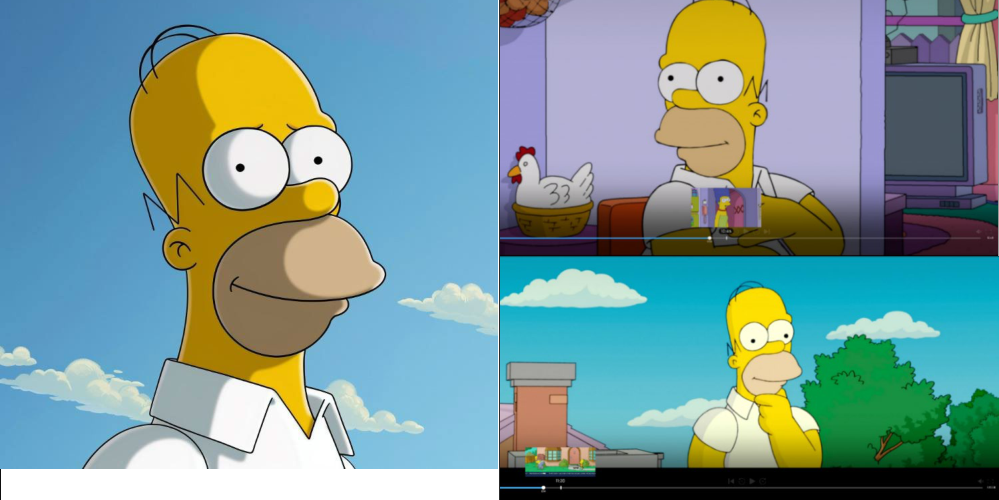
The studios' position is straightforward. They say Midjourney was built using copyrighted works and that the service can generate outputs that are too close to protected characters and expressive elements. The complaint reportedly includes example prompts and output images involving well-known properties, which is part of why the case landed so clearly in public discussion.
Two examples from the complaint show why the output issue is getting so much attention:
Cropped complaint comparison image showing an alleged Midjourney Homer Simpson output beside Disney reference images. Source: Complaint, Disney Enterprises Inc. v. Midjourney Inc., No. 2:25-cv-05275 (C.D. Cal.), page 32.Cropped complaint comparison image showing an alleged Midjourney Minions output beside Universal reference images. Source: Complaint, Disney Enterprises Inc. v. Midjourney Inc., No. 2:25-cv-05275 (C.D. Cal.), page 51.
Midjourney’s likely response is also familiar. Training is not the same as republishing a work. Not every prompted image is substantially similar enough to infringe. And not every reference to a known character, franchise, or visual style cleanly collapses into liability for the platform.
That is why this case matters. Both sides are arguing about where the legal line sits when a model produces commercially useful images that unmistakably evoke existing protected expression.
Can businesses use Midjourney images commercially?
Midjourney’s published guidance says customers generally own the images and videos they create and may use them commercially, subject to its terms and plan requirements. For businesses with more than $1 million in annual gross revenue, Midjourney says a Pro or Mega Plan is required for commercial use.
That contractual permission is only one part of the analysis. It does not guarantee that a particular output is noninfringing, that the user owns every element in the output, or that the output qualifies for copyright protection. Midjourney’s terms provide the service and assets on an “as is” basis, disclaim a warranty of noninfringement, and place responsibility for using or redistributing assets on the customer.
For business use, the practical controls should include:
confirming that the account and subscription plan permit the intended commercial use;
screening prompts and outputs for recognizable characters, logos, protected expression, and other third-party rights;
retaining records of prompts, source materials, edits, and human review;
requiring additional clearance before using AI-generated images in prominent campaigns, products, or customer deliverables; and
reviewing vendor terms regularly because platform rules and protections can change.
Commercial-use permission from the platform answers whether Midjourney permits the use. It does not answer whether a rights holder may challenge it.
For companies, the issue is not just whether Midjourney wins or loses.
It is whether the business has decided what level of copyright and brand-adjacent risk it is actually willing to accept when employees use generative AI in public-facing work.
Many legal teams are comfortable saying obvious character replication is out of bounds. The harder question is the gray zone. Is the company willing to rely on a fair use argument if a marketing image is styled to evoke Disney, South Park, or another highly recognizable visual world? Is it comfortable arguing that a prompt drew on a style, not a protected work? Is it willing to defend that position after publication, in a customer campaign, or in court?
That is the governance issue this case sharpens. Companies need a view on where they are comfortable being aggressive, where they want to be conservative, and which arguments they are actually prepared to stand behind if challenged.
They also need to account for contract risk, not just copyright doctrine. Most, if not all, major AI image providers put the user on the hook for at least some infringement risk tied to prompts, inputs, or outputs. Even when a vendor offers limited indemnity, it is often narrow and conditional. So a company deciding to operate in the gray zone may also be deciding that it, not the service provider, will carry much of the downstream claim risk.
The Clearon AI takeaway
Disney v. Midjourney turns AI copyright risk into a risk-allocation question for users, not just model developers.
The practical lesson is less “never touch this” and more “decide, in advance, which copyright arguments your company is truly willing to own.”
Lawyers and business teams are increasingly using AI to think through legal and risk questions.
That does not automatically make the prompt, output, or workflow privileged.
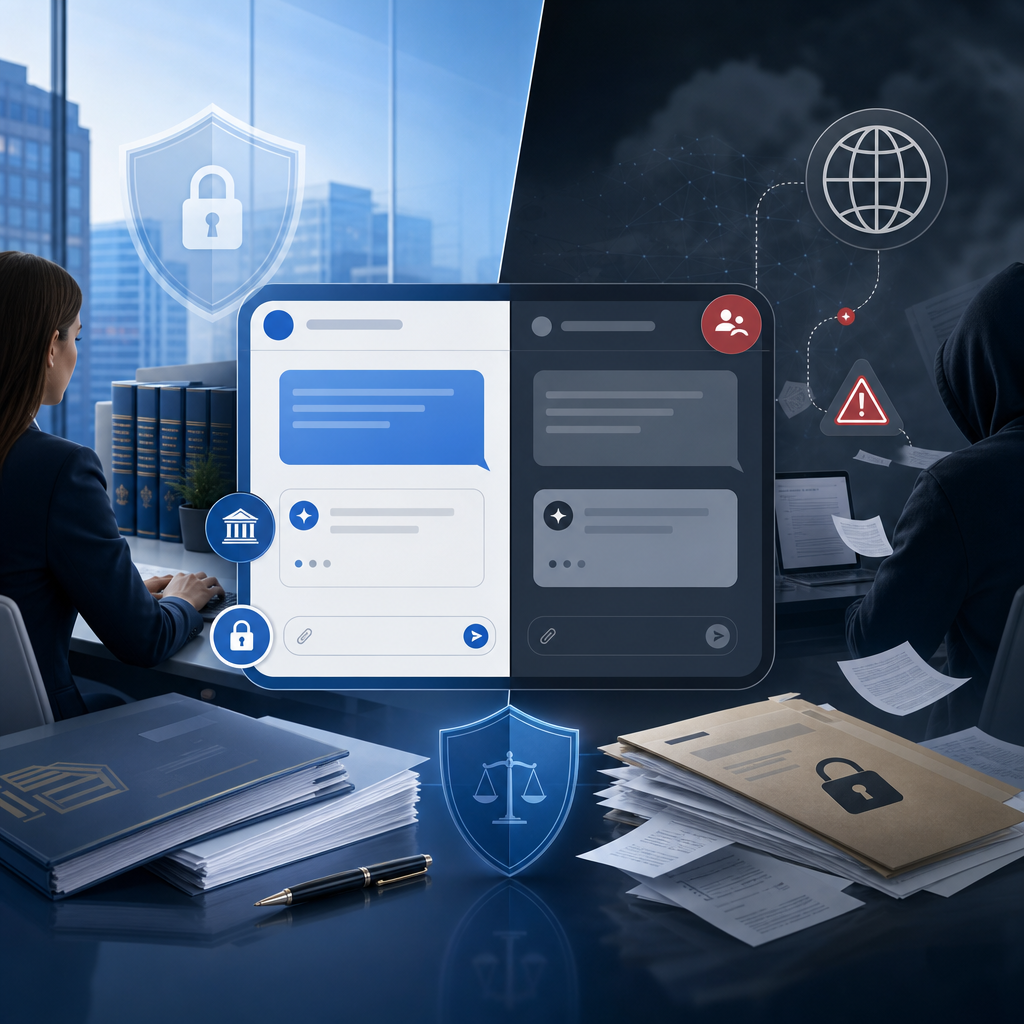
The practical risk is simple: if people put sensitive legal analysis into the wrong AI environment, they may create a discoverable record instead of a protected one.
This is a privilege, confidentiality, and workflow problem showing up in a new tool.
The key practical point
There is a major difference between:
a public or lightly controlled AI tool
and an enterprise environment with negotiated controls, restricted retention, and clear terms that do not permit your prompts or data to be used to train models for other users
That distinction should be doing a lot of work in legal AI policy.
If the tool is not enterprise-approved, if the data controls are unclear, or if the provider can use prompts to improve models for others, legal teams should assume the risk is much higher.
What not to do
Do not paste live dispute facts, investigation details, board communications, draft legal theories, or regulator-response strategy into a casual AI tool.
Do not assume a prompt is protected just because it relates to legal advice.
Do not let employees use consumer AI tools for sensitive legal work without tool-specific approval.
Do not treat “internal” and “privileged” as if they mean the same thing.
Do not rely on vague vendor marketing about privacy or security. Check the actual enterprise terms, retention settings, training terms, and admin controls.
What to do instead
Use an enterprise AI environment with contractual controls and settings that prevent your prompts and data from being used to train models for other customers or the public service.
Limit legal-use cases to approved tools and approved users.
Create a short list of off-limits prompt categories, including litigation strategy, privileged investigation facts, deal-sensitive issues, and regulator-response planning.
Require lawyer involvement when the purpose of the workflow is legal advice.
Know what records the tool keeps, where they are stored, who can export them, and how long they remain available.
What recent cases make clear
Recent attention to cases like United States v. Heppner has put a spotlight on a basic point many organizations still blur: a communication can feel private and still fail privilege requirements.
In Heppner, Judge Rakoff held that AI-generated materials created through Claude were not protected by attorney-client privilege or the work-product doctrine because the defendant disclosed information to a third-party platform and the materials were not prepared by counsel or at counsel’s direction.
Different cases can come out differently, and courts are not applying a one-line rule that all AI prompts are discoverable or all AI-assisted work loses protection.
But that is not a reason for comfort. It is a reason to stop assuming the facts will break your way.
A useful default rule
If a prompt would be uncomfortable to hand to an opposing lawyer, regulator, or prosecutor later, it should not be casually entered into an unstructured AI workflow.
That rule is not perfect, but it is much better than assuming “we were just using AI to think.”
The takeaway for legal teams
The real issue is not the model by itself. It is whether the workflow, tool, and contract structure are good enough to support sensitive legal use.
Clearon AI’s recommendation is not to ban AI for legal work. It is to make sure legal AI use happens inside the right workflow.
approve an enterprise AI environment with terms and settings that protect sensitive prompts and do not allow them to train models for other users
block consumer or unapproved tools for privileged, litigation, investigation, and regulator-response work
limit sensitive legal prompting to approved users and defined use cases
give employees concrete do-and-don’t rules instead of vague policy language
treat prompt security, retention, and export controls as part of legal workflow design, not an afterthought
In law, workflow mistakes have a nasty habit of becoming exhibits.